
Choosing the right time and instrument for your child’s music journey can feel overwhelming. Music is deeply intertwined with childhood development, and starting at the right stage can help kids thrive. Here’s a research-backed guide to help you understand when and how to introduce music lessons to your little ones, complete with recommended instruments for each stage of development.
Ages 0-3: Exploration and Exposure
This stage is all about exposure and sensory experiences. Babies and toddlers benefit greatly from listening to music, moving rhythmically, and engaging in simple interactive songs.
What the Research Says:
- Studies show that early exposure to music promotes language development, motor skills, and emotional bonding. A 2016 study published in PNAS found that rhythmic synchrony (e.g., clapping or bouncing to music) enhances social bonding and early communication.
- Check out many other benefits of early childhood music education in our blog post “Smart Start“
Reccomended Musical Activities:
- Participating in parented group music & movement classes
- Singing nursery rhymes and finger rhymes
- Clapping, tapping, or shaking simple percussion instruments like maracas or tambourines
- Listening to a wide variety of music during your day-to-day activities (car rides, cooking dinner etc.)

Ages 3-5: Rhythm and Play
At this age, children are ready to dive into rhythm and movement-based music activities. Their growing motor skills and attention spans make them eager learners through play.
What the Research Says:
- Gordon’s Music Learning Theory emphasizes audiation (thinking music in your head), which begins in early childhood and is fostered through singing and rhythmic play.
- A 2019 study in Frontiers https://www.frontiersin.org/journals/psychology/articles/10.3389/fpsyg.2019.01910/fullin Psychology found that music activities in preschool improve spatial reasoning and motor coordination.
Recommended Activites & Instruments:
- Group music classes that introduce rhythm, singing, and musical games
- Rhythm sticks, small drums and other rhythm instruments
- Ukulele (for fun strumming and simple coordination)
- Xylophones or glockenspiels to explore pitch
Ages 6-8: Building Fundamentals
Children in this age range have now developed the fine motor skills and focus needed to begin structured music lessons. This is an ideal time for foundational learning.
What the Research Says:
- A 2009 study in Psychological Science revealed that children aged 6-8 who took music lessons demonstrated improved memory, reasoning, and planning skills compared to peers.
- Piano and violin training at this age help build fine motor skills, auditory processing, and executive functioning.
Recommended Activites & Instruments:
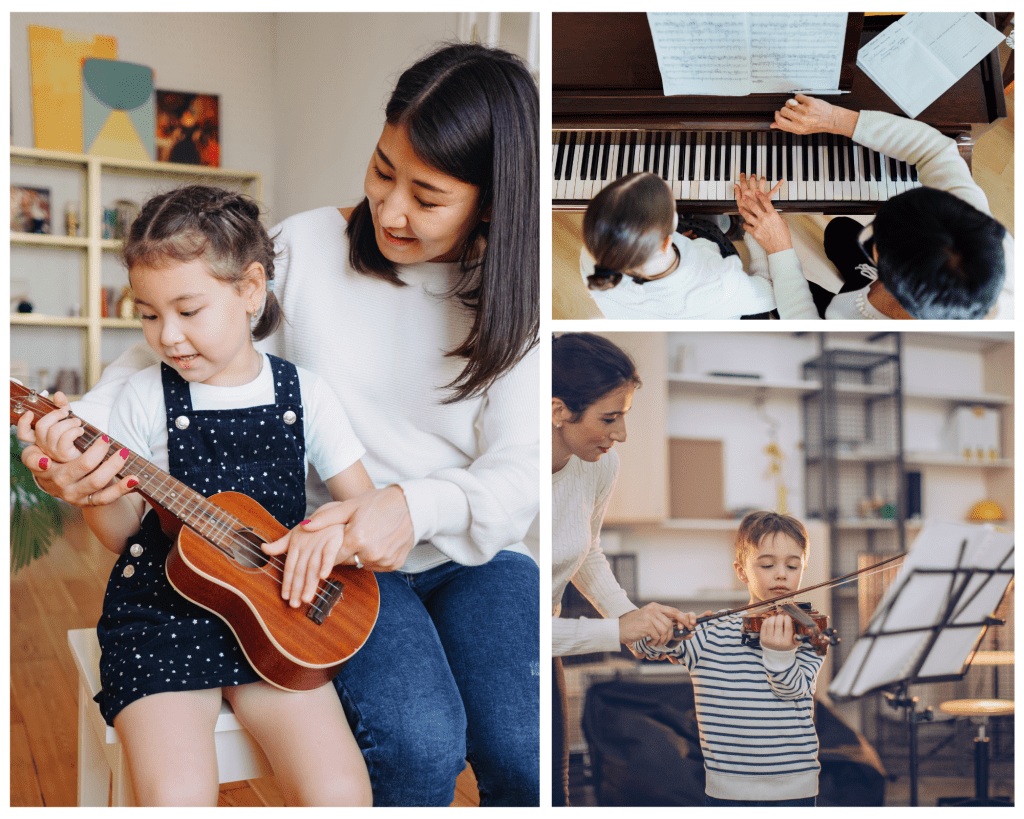
- Piano: A great starter instrument for visualizing music theory and building dexterity
- Violin: Excellent for developing ear training and coordination
- Recorder: An accessible and affordable introduction to wind instruments
- Ukulele: An great introductory instrument that combines singing with playing
- Singing in a choir is a wonderful way to develop musical skills in a group setting and also start to learn vocal control and technique
Ages 9-12: Expanding Horizons
By now, children are ready to dive deeper into musical study, exploring more complex instruments and honing their skills.
What the Research Says:
- Research by the NAMM Foundation highlights how school band or orchestra participation strengthens teamwork, discipline, and social skills.
- A 2014 review in Nature Reviews Neuroscience found that long-term music education significantly improves brain plasticity, aiding in learning and memory.
Recommended Instruments:
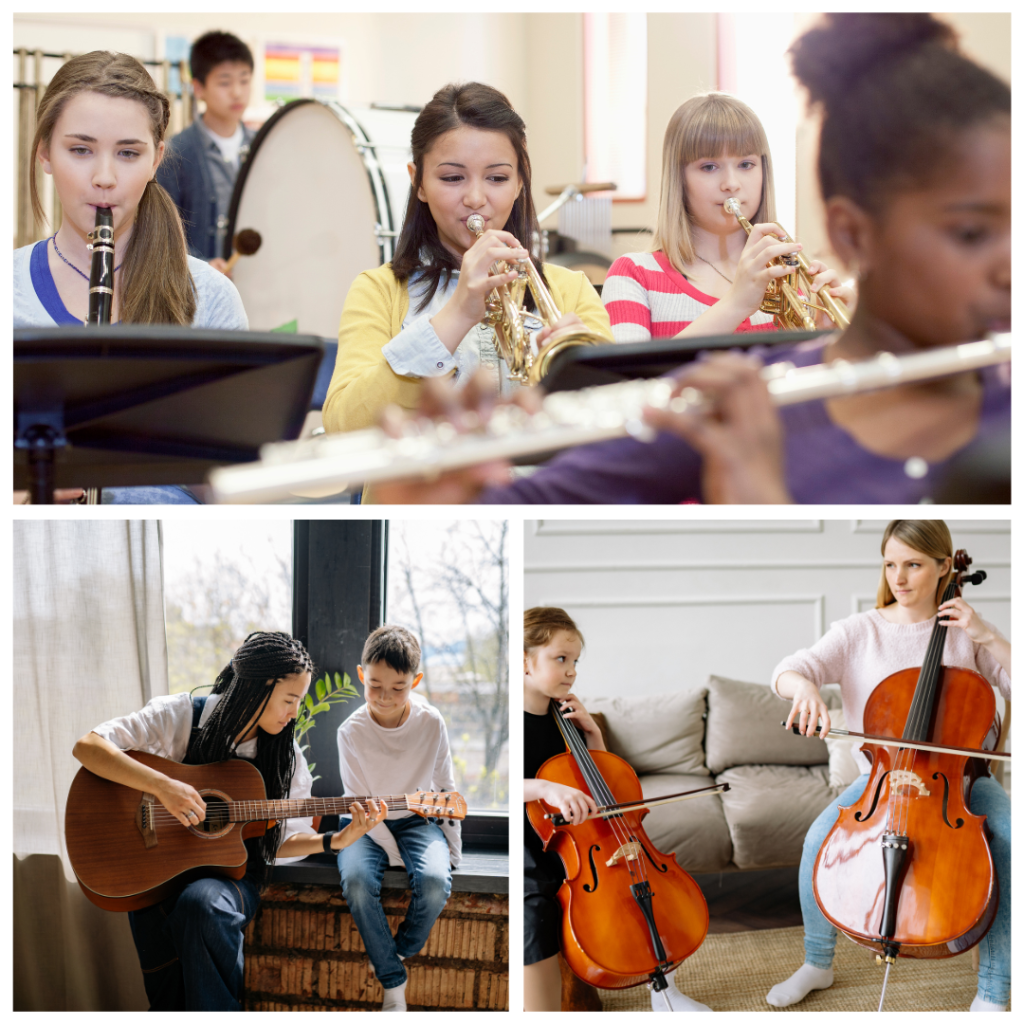
- Guitar: Popular for its versatility and ability to accompany singing
- Band instruments: Flute, clarinet, trumpet, or percussion
- String instruments: Cello or double bass for orchestral engagement
Teens and Beyond: Mastery and Expression
Teenagers can use music as a powerful outlet for emotional expression and creativity. Advanced lessons allow them to refine their technique and explore personal artistry.
What the Research Says:
- A study in Music Education Research (2010) found that teens participating in music programs reported higher emotional well-being and a stronger sense of identity.
- Neurological studies (e.g., Schlaug et al.) demonstrate that musical training during adolescence strengthens brain connections responsible for creativity and motor control.
Recommended Instruments:
- Advanced study of previously learned instruments
- Songwriting and composition tools
- Digital music production programs
Why Music Education Matters
Music lessons do more than teach an instrument—they foster confidence, discipline, and lifelong skills.
Starting music lessons at the right age ensures children build foundational skills, progress through age-appropriate challenges, and discover the joy of music in their own way. Also remember, you are never too old to start learning something new! Whether you are 9 or 90, music education can be a joyful and enriching experience. Stay tuned for a future blog post about learning an instrument as an adult!
Ready to help your child begin their musical journey? Contact Freebird Music Studios today to learn more about our programs!
 Freebird Music Studios
Leave a comment