

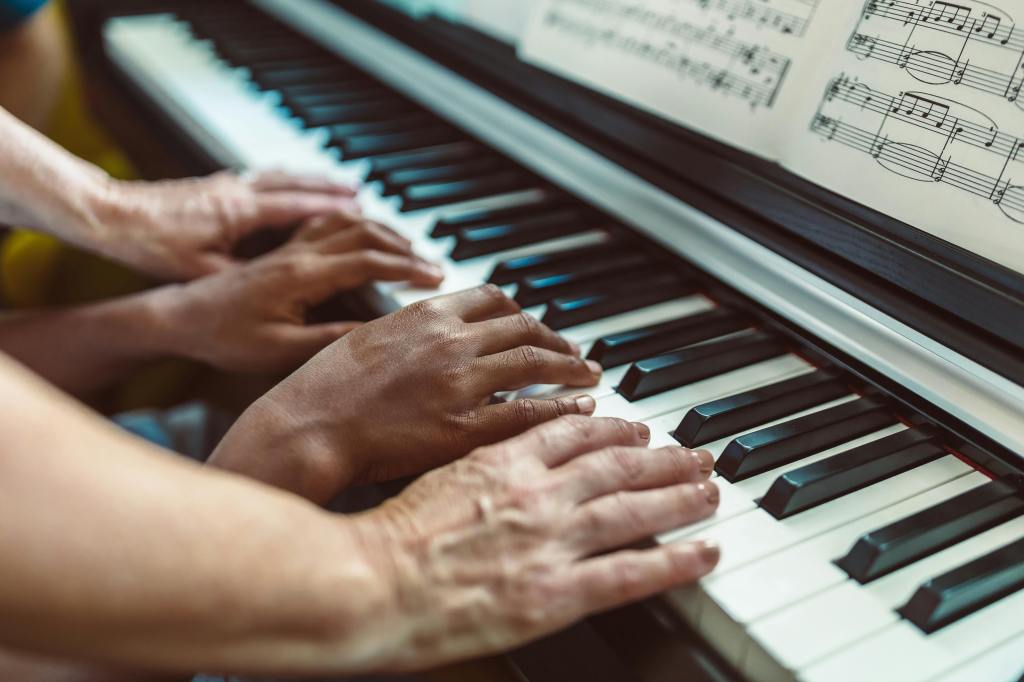
Learning piano is an exciting journey, especially for young beginners! But when it comes to practicing at home, I get a lot of questions from parents such as: How much should my child practice? What should they work on? And how can we make it positive instead of stressful?
The good news? At ages 4–9, for beginner piano students starting out on their learning journey, practice doesn’t need to be long or perfect to be effective. What matters most is consistency, playfulness, and building healthy habits that will grow with your child.
Here’s a guide to help you get started.
1. What’s Realistic for Young Piano Students?
Every child is different, but here are some general, age-appropriate guidelines:
Ages 4–6
- 5–10 minutes per day
- 4–5 days per week
- Focus on exploration, listening, and fun
Ages 7–9
- 10–20 minutes per day
- 5 days per week
- Short, focused sessions with clear goals
💡 Shorter practice sessions that are consistent always beats longer practices that are sporadic A focused 8-minute practice 4-5 times a week is far more effective than a lengthly 30-minute cramming in as much as you can only once a week.
2. How to Start a Piano Practice Routine
Young children thrive on routine and predictability.
Try this:
- Choose a regular time (after school, when parents are prepping dinner dinner, right before bathtime) for your practice session.
- Try to aim for at least 4 times a week minimum.
- Keep the routine simple and familiar
You might say:
“First let’s practice 10 minutes of piano, then we can read a book together!”
This helps practice feel like a normal part of the day—not a chore or a battle.
3. What Should My Child Practice?
To make the most of each lesson, practice time should include a mix of skills, not just repeating songs from start to finish.
A Balanced Practice Might Include:
- 👂 Listening (especially listening to recordings of the songs your child is working on)
- 🎵 Reviewing a couple songs from the lesson
- 🎹 Working on a small section (just a few notes or one hand)
- 🎶 Technique games (finger numbers, hand shape, posture)
- 🎼 Theory basics (note names, rhythm clapping)
Your teacher will guide what’s most important each week—don’t worry about doing everything perfectly.
4. Tips & Tricks for Parents
Parents play a huge role in early music learning—even if you don’t play piano yourself!
You Can Help By:
- Sitting nearby during practice (especially for younger learners)
- Asking your child to teach you and demonstrate what they learned in their lesson
- Praising effort, not perfection. Remind them that it is OK to make mistakes!
- Keeping the mood light and encouraging
Try Saying:
- “I love how focused you were!”
- “You remembered that part all by yourself!”
- “Let’s try it one more time together.”
🚫 Avoid turning practice into a correction session. If something feels hard, make a note and let your teacher help at the next lesson.
5. Make Practice Fun (Yes, Really!)
Music should feel joyful—especially at this age.
Ideas to keep practice engaging:
- Use a practice chart or sticker reward
- Turn songs into mini “performances”
- Clap rhythms or sing note names
- Let your child choose which song to start with
Fun builds motivation—and motivated kids practice more naturally.
6. Progress Looks Different at Every Age
At this stage, progress may look like:
- Better hand position
- Stronger rhythm
- Improved focus
- Increased confidence at the piano
Don’t worry too much if you feel like your child isn’t playing full songs or playing with both hands simultaneously. It’s not about racing ahead—it’s about building a strong foundation that supports future growth.
7. The Goal: Make the Most of Your Lessons
Weekly lessons work best when they are supplemented with practice at home. A students who comes for weekly lessons but only practices once a week at home will likely feel frustrated because they aren’t progressing, rather than a student who practices on a regular basis. Practicing:
- Reinforces what was taught
- Builds confidence between lessons
- Helps students arrive ready to learn something new so each lesson is fun and fresh rather than a repeat of last week.
Even a few minutes a day makes a big difference over time.
Final Thoughts
Practicing piano as a beginner doesn’t need to be overwhelming. With realistic expectations, a simple routine, and a lot of encouragement, your child can build a lifelong love of music—one note at a time.
If you ever feel unsure about what or how to practice, please reach out. We’re here to support both students and parents every step of the way. Also if you want your child to start their piano journey, please get in touch with us at freebirdmusicstudios@gmail.com ❤
Happy practicing! 🎶
Love,
Christina Free at Freebird Music Studios
 Freebird Music Studios
Leave a comment